Why the Mona Lisa makes me smile

Tags

, ,

This slideshow requires JavaScript.

Signor Niño’s Amoroma had moved all the way from Alabang to Tagaytay and, sadly, Signor Niño himself had gone on to that Grande Pizzeria in the Sky. Chris Locher’s first ristorante, C’Italian, was far far away in Angeles, Pampanga (although, to date, Chef Chris has opened his Kitchen in Paco, Manila, and will soon be opening a branch in Makati, but both still require some traveling and toll fees). So, grazie a Dio for the Mona Lisa!

When the Mona Lisa Ristorante opened in July 2010 at Filinvest Westgate, the Alabangers rejoiced! In the suburbs where proper dining restaurants which served authentic Italian recipes were few and far between, the Mona Lisa was a most welcome arrival. It is owned by Michael Grandinetti, an Italian-American from Seattle who traces his roots to Calabria, at the southernmost part of the Italian peninsula. Mike is married to his Filipina wife, Belle, who is also the Executive Chef. Chef Belle had stayed awhile in Italy and studied Italian cuisine there. They both also happen to be dedicated triathletes.

The ristorante is located on the 2nd floor of the Commerce Center along Commerce Ave corner Filinvest Drive at the Westgate, Alabang. In fact, if you look up at the building, you may see La Giaconda herself smiling down at you. 😉

The interiors are modern and comfortable, with Michaelangelo-esque frescoes on the ceiling as if to underscore the Italian theme. Some kitschy touches here and there, but hey, this is the ‘burbs. I love to sit by the large windows, with a view of the Westgate traffic below. Most of the time, especially on weekend nights, Mike Grandinetti himself will welcome you to his restaurant in his warm and hearty Italian way. And you can count on very good and hearty Italian food here — perhaps not quite alta cucina, but definitely dependably delicious cucina casalinga, or traditional home cooking. My favorite dish here is the umami-yummy Gnocchi al Funghi e Porcini, washed down with a glass of excellent red wine! And, of course, there’s the Cannoli! Who can resist the sweet and crunchy cannoli filled with creamy ricotta, pistachio nuts, and other good stuff, paired with a scoop of syrup-drizzled gelato? I’ve found myself smiling like the Mona Lisa each time after a meal here. Definitely, my bouche is amused every time.

It’s a popular dining destination in the South, so be sure to reserve a table first. You may call 556-0708 or +63917.8365472 or email monalisa_1623@yahoo.com.

Julie & Julia

Tags

,

This slideshow requires JavaScript.

This August 15, 2012 was Julia Child’s 100th birthday! In acknowledgment and in  celebration of this trailblazing foodie and oh-so-remarkable woman, I watched the movie Julie & Julia all over again.

In a nutshell, Julie & Julia is a tale of two parallel lives — one of an aspiring writer slogging away in a boring job and living in Queens with her husband, the other of Julia Child who, during the late 1940s and 1950s, felt restless and intellectually adrift while living in Paris with her husband. Child then discovered her true calling when she decided to learn how cook the proper French way at the famed Le Cordon Bleu. Powell, on the other hand, needing some creative direction and fulfillment in her life, also challenged herself by cooking ALL 524 recipes in Julia Child’s famous cookbook, Mastering the Art of French Cooking, every day for one year and chronicling her attempts in her blog.

Written and directed by Nora Ephron, it is based on Child’s autobiography with Alex Prud’homme, “My Life in France” and Julie Powell’s blog-turned-book entitled  “Julie & Julia : 365 days, 524 recipes, 1 tiny apartment“. It stars the magnificent Meryl Streep, masterfully portraying the inimitable Julia Child down to her fluting drawl to a tee, and Amy Adams as author and amateur cook Julie Powell. The extraordinarily talented Stanley Tucci, one of my most favorite actors ever, plays Julia’s husband Paul Cushing Child with a brilliance and a strong yet subtle presence that complemented and stood up to Meryl Streep’s dazzling cinematic charisma.

As The Vine review said: “Julie & Julia is not a mere celebration of food but a pleasant pair of true stories about the hand that rocks the ladle.” Yes, it is a delightful film. Definitely worth watching, if you like foodie films as I do. BUT, it’s not great — for me, it so failed to resolve satisfactorily the Julie and Julia connection, that it felt a bit anticlimactic.  Most of my favorite scenes were in the “Julia” part of the story. Amy Adams is charming and sympathetic but the lovely shots of Paris, the tour de force performance of Meryl Streep, together with Stanley Tucci, and the colorful character that was Julia Child simply drown out the more prosaic life of Powell/Adams and her husband. In fact, after watching the movie the first time, I actually went out and bought a hardbound copy of Child’s famous cookbook. Not that I would ever attempt to replicate what Julie Powell did. I can’t even master the French omelet (yet?), despite how easy Julia Child makes it out to be.

________________________________________________________________

P.S. I kept a clipping about Julia Child from a November 2001 issue of Oprah’s O magazine, where she lays out 8 of her favorite books — The Soul of a Chef : The Journey Toward Perfection by Michael Ruhlman, The French Laundry Cookbook by Thomas Keller, Kitchen Confidential : Adventures in the Culinary Underbelly by Anthony Bourdain, How To Read a French Fry and Other Stories of Intriguing Kitchen Science by Russ Parsons, Stand Facing The Stove: The Story of the Women Who Gave America the Joy of Cooking by Anne Mendelson, The Essential Rilke, Edith Wharton : A Biography by R.W.B. Lewis, and mystery novels by Mary Higgins Clark and Sue Grafton.

TAMPOPO — Raving about Ramen

Tags

,

This slideshow requires JavaScript.

Most of you may perhaps be familiar with the film sub-genre “Spaghetti Western”. Well, I call the film Tampopo by Jozu Itami a “Ramen Western”, that stands bright and unique in the firmament of filmdom. From the exaggeratedly complex depths of the humble ramen to the orgasmic heights of hedonism that food and sex can take you, Tampopo is extremely satisfying. It is one heck of a fantastic and joyful food trip, which includes dizzying detours which sometimes leave you flummoxed but most of the time give you a refreshing break (sort-of like a palate cleanser) from the main course, that you will never want to get off once you get on! As “the master” said, you will appreciate its gestalt.

The characters are distinct and memorable, expertly delineated and endearing — from the delicate but dedicated Tampopo herself and craggy-faced, cowboy-hat-wearing Goro to the white-suited Yakuza gangster to the hobos with surprisingly well-educated and fine-tuned palates. The vision, though complex to the point of labyrinthine, is clear and forceful. Written, directed, and produced by the amazing Jozu Itami, it is a sumptuous cinematic feast that only an extraordinary non-linear mind and brilliant story-telling genius like his can concoct. You will not be able to help yourself. Right from the start, from the very first scene, you will be inextricably drawn to the characters. And you will find yourself inhabiting the many stories that Itami lays before you. What a banquet for the senses! And Tampopo is gratifying to the very last drop … or, I should say, to the very last scene as the credits rise. (You must watch the film to know just what I mean.) When you see even just this one film of his, you will understand why Juzo Itami is one of my all-time favorite directors.

The best review of Tampopo that I have ever read was written by Hal Hinson of the Washington Post, way back in 1987 just after the film was launched in Hollywood — http://www.washingtonpost.com/wp-srv/style/longterm/movies/videos/tampoponrhinson_a0c94d.htm. Here is an excerpt: “Jozu Itami, the director of the Japanese film “Tampopo”, may be the most impenitent hedonist the movies have ever seen. As a filmmaker, he revels in sensual pleasure, and the spirit of his film is exultant, orgiastic. The movie has been described elsewhere as “Zen and the Art of Noodle-making”, but its spirit couldn’t be less Zen-like. Itami isn’t interested in detachment. He’s a zesty, immoderate connoisseur of pleasure-taking in all its forms — food, sex, movies — and he jumbles them all together here into a hilarious concoction. It’s half movie, half dessert-topping, a film gourmand’s lusty dream…

Click on the link, if you want to read more about it. But I suggest you watch the film first so as not to spoil the scrumptious surprises it serves up. And be prepared to be overcome by a sudden craving for a steaming-hot bowl of Japanese ramen, after watching it. I was … each and EVERY time I watch it! This is a film classic that all true food-enthusiasts MUST SEE at least once in their lifetimes. It is simply oishii in every way!

Image

Soup du Rainy Jour

Tags

,

This slideshow requires JavaScript.

What is it about the cold weather and the pouring rain and blustery winds that make one’s thoughts … and tummy… turn to soup?

Here are just a few of my favorite potages. What’s yours?

Sampling at the Savoy

Tags

,

This slideshow requires JavaScript.

Savoy, home of great viands. Savoy, it wins you with a glance. Savoy gives happy foodies a chance to dance. — with apologies to the legendary Ella Fitzgerald and the great Benny Goodman for the paraphrase. (http://www.youtube.com/watch?v=bpww0IoSQ0M)

When I hear the word “Savoy”, I think of Old-World refinement and elegance, as in the classic hotel in London. I also think of the hoppin’, hedonistic club in Harlem. But here, I’m “singing” about the Savoy Bistro located unobtrusively along Kalayaan Avenue, near Rockwell in Makati.

And when I hear the phrase “Swedish chef”, I think of that hilarious orzh-de-borscht-de-borg gibberish-speaking character from the Muppet Show! But Swedish chef Robert Lilja is as far from that madcap muppet as balut is from Eggs Benedict. Chef Robert is the force behind the Savoy Bistro, which specializes, they say, in recipes of the traditional haute cuisine of France (most especially the Savoie region), Switzerland, Sweden, Russia, and Hungary. Perhaps he is known more for his successful The Gustavian restaurant in Cebu or his cafe La Bohème at the Picasso Boutique Hotel in Salcedo Village, Makati, but here at the Savoy, Chef Robert gives free rein to his love of classic European cuisine.

In this first time to sample the Savoy, my friends and I ordered the Prix Fixe lunch to experience what the bistro is all about. It included 5 courses — one’s choice of salad, soup, main course, dessert, and coffee or tea. And we were blown away! Each dish was a full and hearty serving — unexpectedly large for a Prix Fixe meal — and each course was superb in taste and presentation. Which did not even include the complimentary amuse bouche of smoked salmon and mango on pumpernickel bread. At a most reasonable price yet at about P700 per person that one would have typically spent at least a thousand bucks for! Despite the rather lackluster service, the food impressed us enough to want to come back for more. The Savoy is definitely worth seconds!

To know more about Chef Robert Lilja and the Savoy Bistro, read more about it in these more detailed write-ups. Just click on the links.

The Savoy Bistro by Jocelyn Montemayor Reyes and Eating Through Time.

Savoy Bistro is at 8479 Kalayaan Avenue (near the Bel-Air Gate on Amapola St.), Makati. Telephone (02)8965667. Open daily from 12nn to 3pm, and 6pm to 12mn.

Kay Sarap sa KaLui

Tags

,

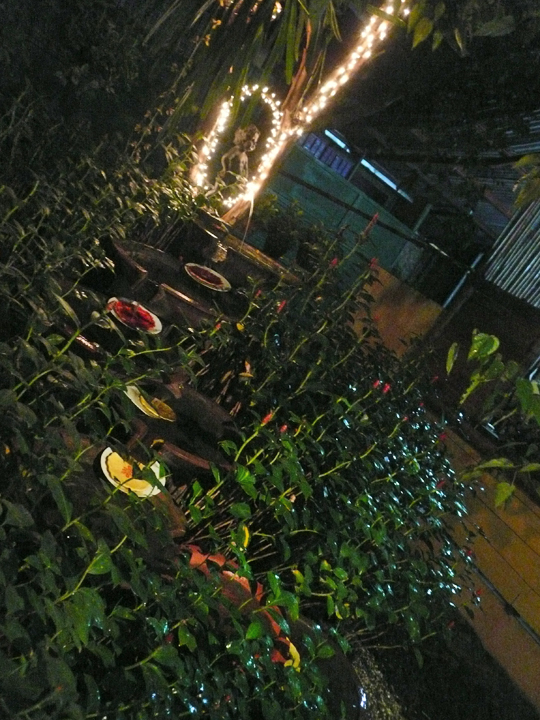
It was my first time in Palawan and I stayed in its capital city of Puerto Princesa. Progressive and almost bustling it may be, the city still retains its provincial charm and unpretentiousness. However, I did notice that there are several enchanting choices in restaurants and bistros. One of them came highly recommended by a dear friend — KaLui. It touts itself as “the most famous and best value restaurant in Palawan”.

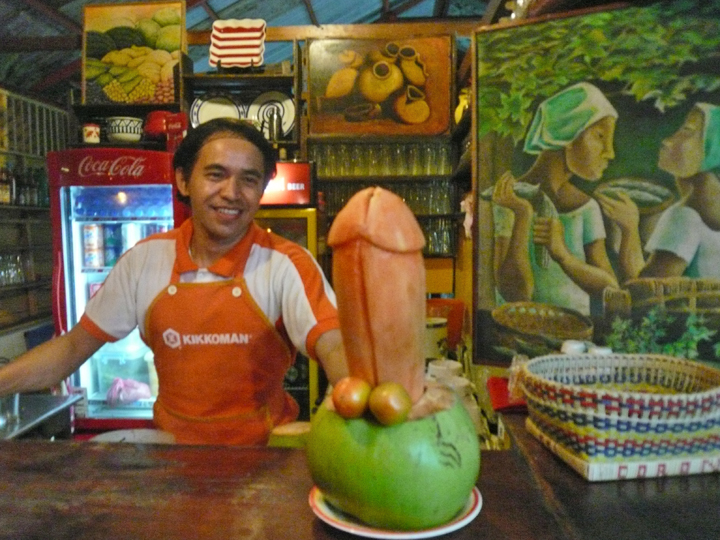
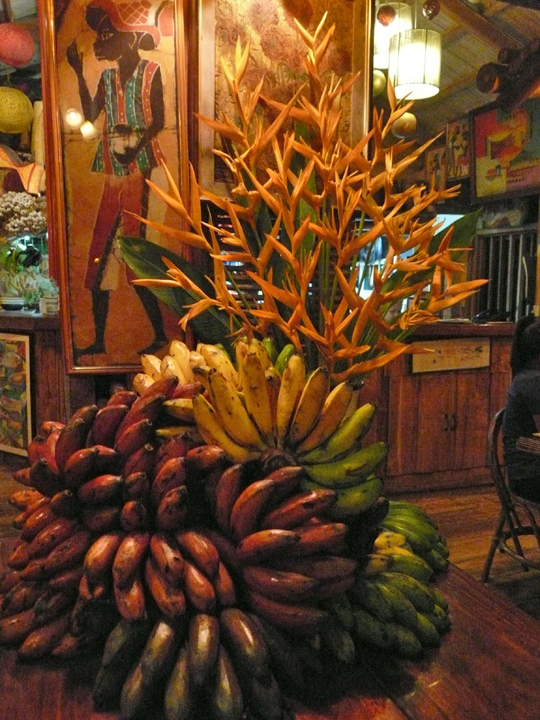
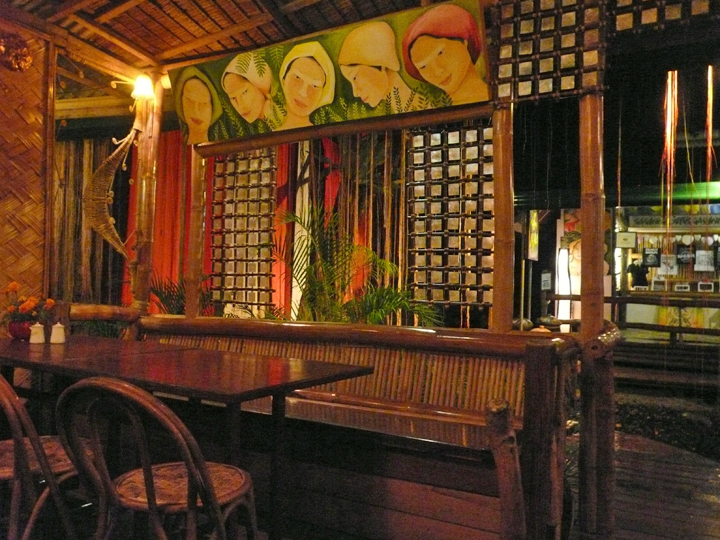
Eponymously named after its owner Luzerino Oliva, familiarly called Ka Lui, the restaurant is designed like a stretched-out native house of bamboo and solid wood. To enter, one has to take off one’s footwear, as in age-old Filipino (and for that matter, Asian) custom when entering anyone’s home. It does sort-of make one feel right at home, barefooting on the well-polished wood floors, I suppose. And the place really does feel homey in an over-the-top sort of way, with interiors so colorful and artful to the point of almost kitschy. Even the restrooms are thoughtfully designed. Of course I can only speak for the ladies’ room 😉 One part of the restaurant is serves as an art gallery which exhibits the works of local artists. There are a few phallic objets d’art discreetly placed here and there, one of which is often “held” yet unrecognized by many a customer, judging by the sheen of its surface.

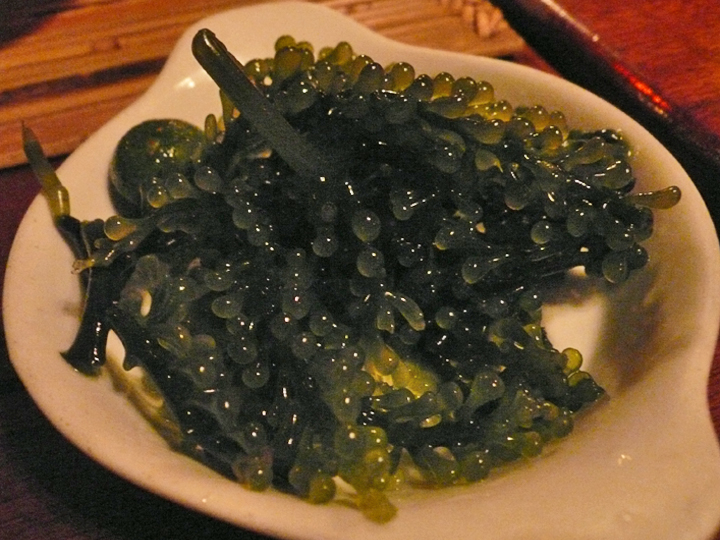
Seafood is KaLui‘s main specialty. FRESH seafood! The repertoire may be limited as compared to the usual restaurant but one can always expect the seafood to be nothing less than the freshest catch of the day. And Palawan is a veritable treasure trove of the most wonderful seafood — from tuna, grouper (lapu-lapu), maya-maya, pampano to eels and rays, from clams and mussels (especially the endemic tamilok) to lobsters, prawns, crabs, and latô (seaweed).

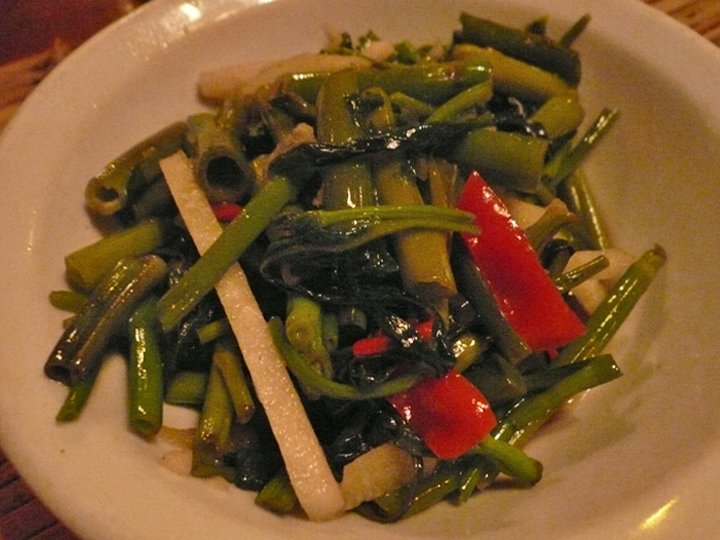
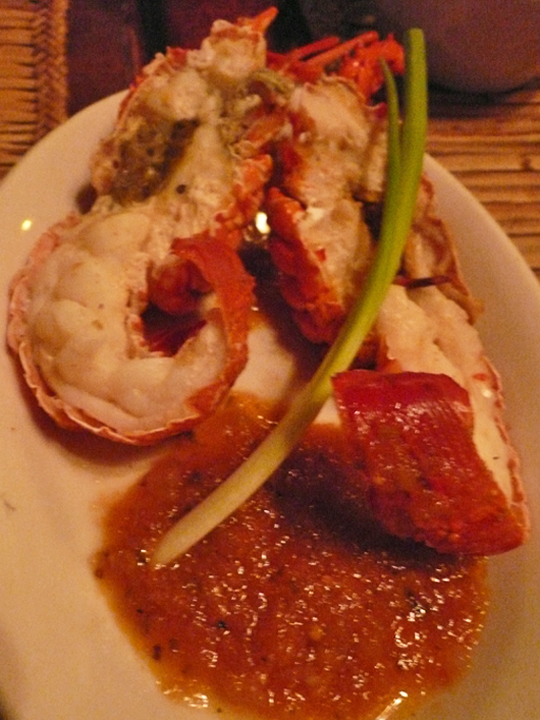
KaLui gives diners the choice of the “Special of the Day” and the “Choice Catch.” These dishes are created from whatever freshest catch and ingredients which Ka Lui and his chefs find that day from the market and their fishermen suppliers. And from there, he decides on the best way to prepare and cook them. The evening I went, we had the crunchiest latô salad, dressed only with a squeeze of calamansi… grilled lobster, zested up with a fresh marinara sauce… beautifully seasoned and grilled tuna steaks. They even do justice to the simplest of vegetable dishes, like tempura and pinakbet. Carnivores may feel a little frustrated — KaLui rarely serves meat on their menu. The restaurant also stocks a good selection of South American wines for those, like me, who want fine vino to complement the excellent meal.

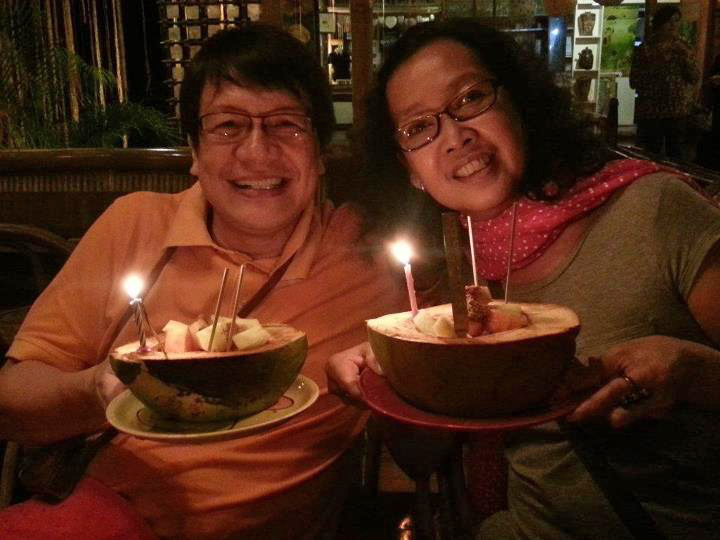
The next time I find myself in Palawan, I would definitely make it a point to dine here again. Fine fresh food, delightful ambience, good service, and reasonable prices — what more could one ask for? My bouche is happily amused!

KaLui is located at 369 Rizal Avenue, Puerto Princesa City, along what I suppose is the city’s restaurant row. They rarely accept walk-ins so it is best to make reservations early: 048 4332580 or +63928 7539621.

Sea Grapes

Tags

,

This slideshow requires JavaScript.


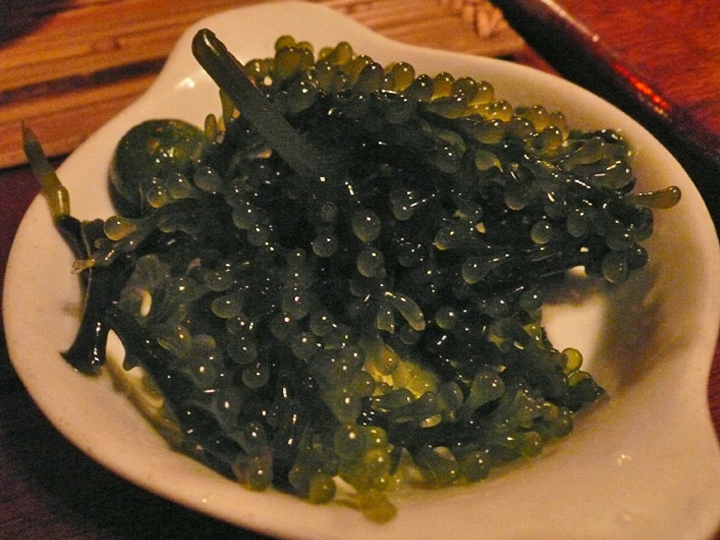
When my niece and nephews were very small, I made them try latô. They looked doubtfully at this strange-looking, green bunch of tiny “nodules”, but I told them they were grapes that grow in the sea. “Ah, grapes”, said their young and innocent minds! Their vegetable police has outsmarted them again. At first, the briny taste weirded them out… but they liked it. They loved how the tiny “grapes” would pop in their mouths and would explode with the amazingly delicious flavor of the sea. And that’s how I got them to like latô.

Latô, also called arorosep in the northern provinces, is a seaweed that grows deep in the ocean, in intertidal zones near mangrove forests. Living in the city, getting your hands on really fresh latô is not easy. They are usually packed in seawater to keep them as crisp and fresh as possible in their trip from the sea to the market to your table. It’s incredibly delicate, too. Those teeny-weeny grapes can melt into watery nothingness if banged around in your shopping bag or even washed with tap water long before you eat it. To keep it crisp, rinse it quickly just before you eat it.

I like my latô as a salad, combined with sliced tomatoes and onions. NEVER pour dressing or sauce over the entire salad — they will melt. I dip the salad separately in a sauce of Bagoong Balayan and kalamansi. Some prefer to use local vinegar, like sukang Iloco, as dipping sauce. They make a healthy and perfect side dish to fried or grilled fish.

In texture, flavor, and the aroma of the ocean, it’s a winner! I love latô — Definitely amuses my bouche!

The Langkâ

Tags

Image

Langkâ. Jackfruit in English. It’s similar to the durian but, thankfully, it doesn’t reek as much as durian does. I am fortunate to have a healthy, prolific tree growing in our backyard. And every summer, it favors us with an abundance of fruit — heavy and humongous… and spiky — which, in my rough estimate, can weigh up to 20-25 kilos on the average (medium-sized by most standards). After waiting very patiently for weeks, we pick them at their perfect state of ripeness, with the bright yellow flesh still firm and beautifully sweet.

There are so many ways to enjoy langkâ (or nangka, as it is called in some provinces). More than any other way, I like to eat it fresh and raw and just slightly chilled, in all its natural and fragrant sweetness and the flesh firm and crunchy-chewy.

Unfortunately, we usually have no leftovers of the peeled fruit, because otherwise, I do enjoy slivers of it inside turon or rolled “lumpia” of sweet saging na saba (cardava banana, in English). Most of my friends, though, especially the ones who live abread, think halu-halò at the mention of langkâ. But we also set aside the big seeds inside each jackfruit aril. These are boiled or roasted. The seeds have a subtle, nutty taste. A good and healthy snack.

Even the unripe fruit can still be enjoyed as Guinataang Langkâ — cooked in coconut milk, with a little bit of sliced fresh chili pepper, and shrimp or dried/salted fish (daing, dilis, or tinapa).

Panizza by Chef Chris Locher

Tags

, ,

This slideshow requires JavaScript.

Panizzas by Chef Chris Locher.

He first introduced his now-famous panizza at his restaurant, C’Italian, in Angeles City, Pampanga. But metro-foodies don’t have to travel all the way there now — Chef Chris has opened My Kitchen at the Oasis Paco Park Hotel right in Manila! Of course, he serves his panizza as well as other fine Italian dishes. He also makes his own Italian sausages and deli meats.

The Panizza is a thin yet pliable pizza that one rolls up for a pop-in-your-mouth eating enjoyment. An original creation by Chef Chris, it comes in several flavor variations. It comes conveniently sliced into strips which you then top with fresh arugula or rocket, some alfalfa sprouts, and a drop or two or three of chili oil. Then you roll it all up and bite! The deliciously crisp dough gives way to all the amazing tastes and textures inside! Chef Chris Locher’s Panizza always amuses my bouche!

The Oasis Paco Park Hotel (beside Paco Church near Old Swiss Inn)
1032-34 Belen Street, Paco, Manila                                                                        You MUST reserve (it is almost always full) : +632 521-2371 to 75                          Check out https://www.facebook.com/mykitchenbychefchris